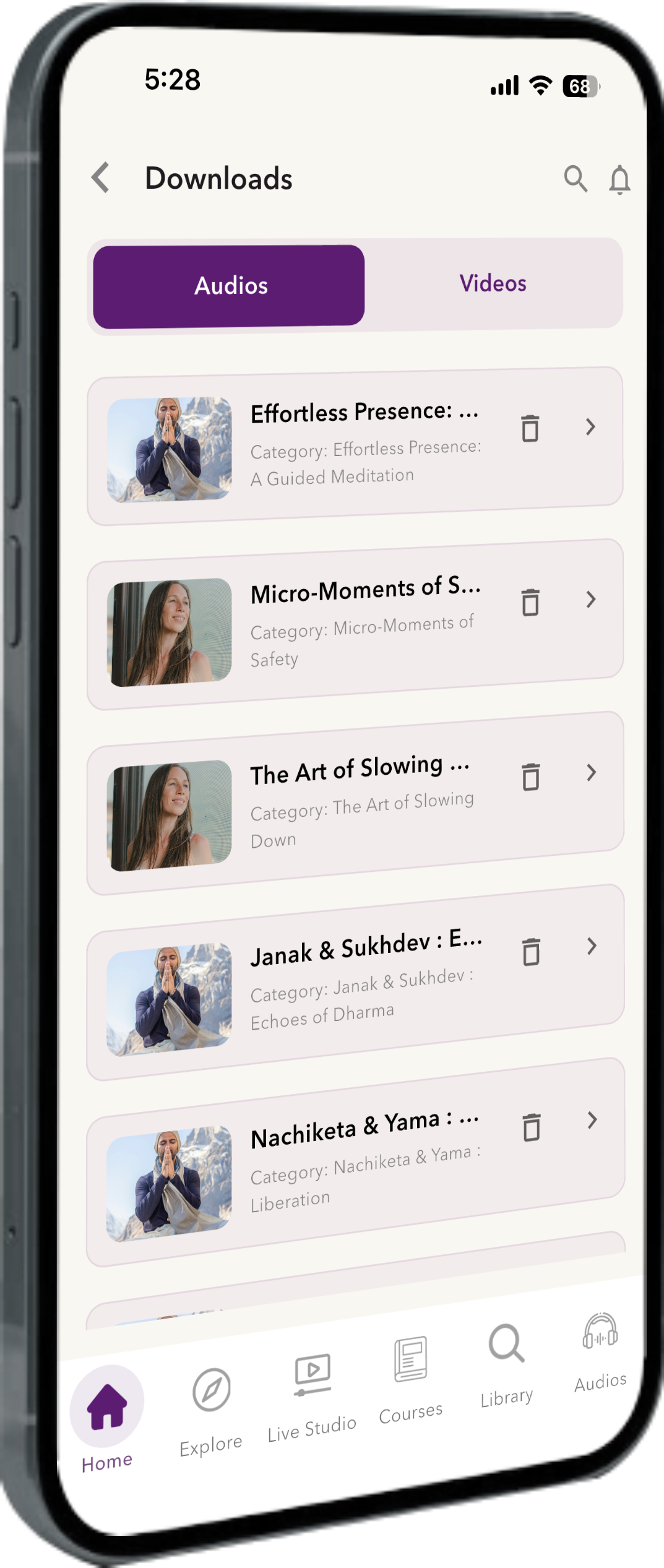

Get the Sattva app for
App exclusive features
Including member-only experiences

by Sattva Connect
Yoga teacher training is a significant step.
For some practitioners, it marks the beginning of teaching professionally. For others, it is an opportunity to understand yoga with greater depth—to study asana, breath, meditation, philosophy, anatomy and the principles behind effective teaching.
Today, online yoga teacher training makes that level of study accessible without requiring every student to relocate or step away from work and family responsibilities for several weeks.
But accessibility alone does not make a training programme valuable.
A strong online yoga teacher training should combine structured study with practice, interaction, feedback and opportunities to develop the skills required to guide others responsibly.
Himalayan Practices approaches yoga education from its roots in Rishikesh, India, while making the learning accessible to practitioners around the world.
Traditional residential teacher training can be an immersive experience, but it is not practical for everyone.
Work, family responsibilities, location, travel costs and other commitments can make extended residential study difficult.
Online training creates another route.
Depending on the programme, students may be able to combine live teaching with recorded study, independent assignments, personal practice and practical teaching sessions.
This can allow learning to become part of everyday life rather than something separated from it.
However, flexibility should not mean a lower standard of education.
The strongest online programmes still require commitment, participation, practice and assessment.
Teacher training is not exclusively for people who have already decided to teach.
It may also be appropriate for experienced practitioners who want a more structured understanding of yoga.
You might consider teacher training if you want to:
Previous experience with yoga is valuable, but the appropriate entry requirements will depend on the individual programme.
What matters most is understanding that teacher training requires more than enthusiasm. It asks for consistency, attention, study and a willingness to keep learning.
A comprehensive teacher training goes well beyond memorising postures or learning how to lead a sequence.
Teaching yoga means learning how to communicate, observe, adapt and create an environment in which different people can practise intelligently.
Asana study should help trainees understand both personal practice and the process of teaching movement to others.
That can include posture foundations, transitions, sequencing, alignment principles, adaptations and an awareness of common contraindications.
Teacher training should also develop observation.
A teacher is not simply demonstrating a posture at the front of a room. They are learning to recognise how different bodies move and how instructions may need to change accordingly.
Strong physical practice is valuable, but performing advanced asana is not the same skill as teaching yoga well.
A working understanding of the body is an important part of responsible teaching.
Trainees should become familiar with relevant anatomy, movement principles and the physical considerations that may affect a yoga practice.
The purpose is not to turn yoga teachers into medical professionals.
It is to help teachers understand the boundaries of their role and guide movement with greater awareness.
Yoga education extends beyond asana.
Pranayama introduces traditional approaches to working consciously with the breath, while meditation develops the capacity to work with attention and awareness.
Teacher training can give practitioners an opportunity to experience these practices more systematically and understand how they relate to the wider framework of yoga.
More advanced breath practices require thoughtful progression, appropriate instruction and an understanding of when modifications may be needed.
Teacher training should also ask a fundamental question:
What are we actually teaching when we teach yoga?
Studying yoga philosophy gives practitioners a context for understanding ideas that extend beyond posture and physical conditioning.
Ethics are equally important.
Teaching involves responsibility, boundaries, communication and respect for the people entering a class. These subjects deserve the same seriousness as sequencing or technique.
Knowing yoga and teaching yoga are not identical skills.
A teacher needs to learn how to structure a class, communicate clearly and create progression.
Training may include:
The objective is not to teach everyone in exactly the same way.
It is to develop the judgment required to respond intelligently to the people in front of you.
This is one of the most important areas to evaluate when comparing online teacher training programmes.
Watching videos about teaching is not the same as practising teaching.
A serious programme should create meaningful opportunities to apply what has been learned.
That may include teaching practice, observation, assignments, live sessions, assessment and constructive feedback from experienced faculty.
Feedback is particularly valuable because it reveals things that are difficult to see in your own teaching—from unclear cueing to pacing, sequencing and communication habits.
Online learning can form the basis of legitimate yoga teacher education, but prospective students should look carefully at the specific programme they are considering.
The important questions are not simply whether a course is “online” or “certified.”
Ask:
Clear answers to these questions are a sign of a more transparent training provider.
The terminology around yoga teacher training can be confusing.
“Certificate,” “certification,” “registration” and “accreditation” are often used interchangeably in marketing, even though they may refer to different things.
Before enrolling, understand exactly what qualification the programme provides.
If recognition by a professional organisation matters to you, verify the school's current status directly and confirm whether successful completion meets the requirements relevant to the credential you want to pursue.
Do not choose a programme only because a logo or certification phrase appears prominently on a webpage.
The depth of the education matters just as much.
A curriculum can look impressive on paper.
Look closely at who teaches it.
Consider their years of practice and teaching, areas of expertise, approach to students and experience training future teachers.
A strong training should have a clear educational direction.
It should not feel like an unrelated collection of videos about different yoga topics.
Asana, anatomy, pranayama, meditation, philosophy and teaching methodology should connect to one another.
Recorded material can be useful, particularly for reviewing information.
But teacher education also benefits from dialogue.
Look for live learning, opportunities to ask questions, feedback and interaction with faculty.
This is essential.
Find out how often trainees practise teaching, who observes them and how feedback is provided.
If asana is an important part of the methodology, training should develop more than flexibility or the ability to perform impressive poses.
Look for attention to strength, mobility, stability, sequencing, observation, adaptations and intelligent progression.
Different yoga schools and training programmes may approach yoga differently.
There is no need for every programme to be identical.
What matters is transparency.
Students should understand the tradition, lineage or methodology informing what they are learning.
Digital learning makes geography less restrictive, but place can still matter.
Rishikesh has long been an important centre for yoga practice, teaching and study in India. Its relationship with Himalayan traditions gives it a particular place within the modern global story of yoga.
An online programme rooted in Rishikesh can make that educational environment accessible internationally—but authenticity should mean more than repeatedly mentioning a location.
It should be visible in the depth of the curriculum, the experience of the teachers, the understanding of tradition and the way practices are taught.
Himalayan Practices was born in Rishikesh and is designed to make serious yoga practice and study accessible to a global community.
Its broader approach to practice brings together dimensions such as:
For teacher education, the goal should be greater than producing someone who can memorise and repeat a class sequence.
A meaningful training develops practitioners who understand what they are teaching, continue questioning and learning, and approach the responsibility of guiding others with care.
Before committing to an online yoga teacher training programme, ask yourself and the training provider:
What do I want from this training?
Are you preparing to teach, deepening your personal practice, or both?
Who will teach me?
Look beyond titles and study the teachers' actual experience and approach.
How will I practise teaching?
Teaching ability develops through application and feedback.
What qualification will I receive?
Make sure the answer is precise.
How much live interaction is included?
Consider whether the programme offers genuine access to teachers.
Does the curriculum go beyond asana?
Teacher education should help you understand the wider context of yoga.
Does the programme's approach resonate with how I want to practise and teach?
This may matter more than choosing a course simply because it can be completed quickly.
Yes, yoga teacher education can be delivered online. However, programme structure, training hours, live participation, assessment and recognition vary considerably. Always check the requirements and credentials of the specific programme before enrolling.
Not necessarily. You do not need to perform advanced postures to become a thoughtful teacher. However, some programmes may require a certain amount of prior practice. Consistency, curiosity and willingness to study are generally more important than physical performance alone.
A comprehensive programme may include asana, anatomy and physiology, pranayama, meditation, yoga philosophy, ethics, teaching methodology, sequencing and practical teaching experience.
No. Some practitioners undertake teacher training primarily to deepen their own understanding. The programme can provide structured study even if teaching professionally is not the immediate goal.
Look at the experience of the faculty, curriculum depth, live interaction, teaching practicum, assessment methods, student support, methodology and the exact qualification awarded. If professional registration matters to you, verify eligibility before enrolling.
A teacher-training certificate can mark an important milestone, but it does not represent the end of learning.
Good teachers remain students.
They continue practising, studying, refining the way they communicate and recognising the limits of what they know.
Online yoga teacher training can make serious study more accessible across borders and life circumstances. The value of that training, however, depends on the depth of the programme and the commitment brought to it.
For those drawn to an approach rooted in Rishikesh and interested in exploring asana alongside meditation, pranayama, philosophy and deeper yogic practice, Himalayan Practices offers a place to continue that study within a global community.





























































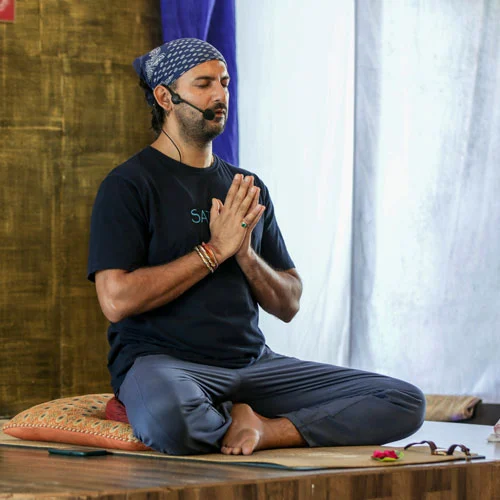

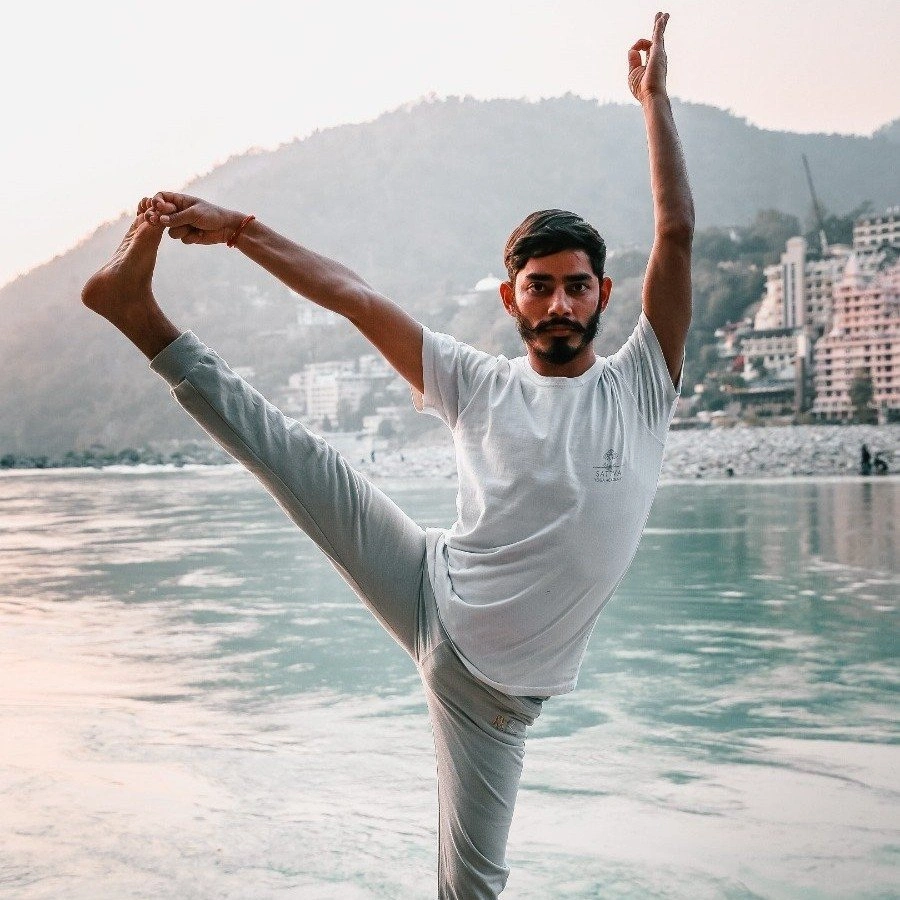
Tuesday 06 Oct 2026 07:00:00 PM IST
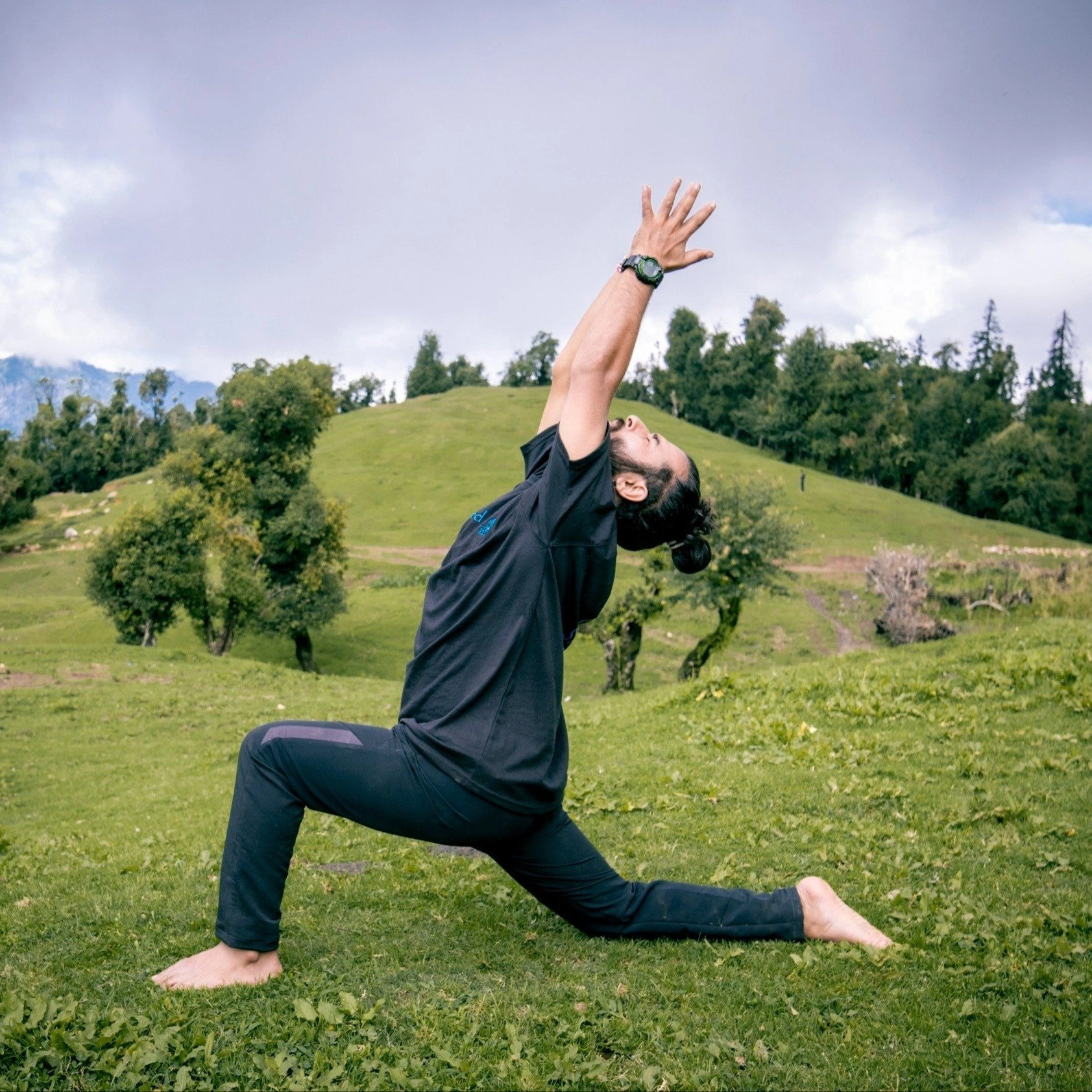
Wednesday 07 Oct 2026 07:00:00 AM IST
Thursday 08 Oct 2026 07:00:00 PM IST
Friday 02 Oct 2026 06:00:00 AM IST
Sunday 11 Oct 2026 07:00:00 PM IST
Friday 09 Oct 2026 06:00:00 AM IST

Your purpose here is to evolve, to transform, to experience your radical aliveness, to awaken to your true nature. You are the path. The path is you. The time is now.