
Get the Sattva app for
App exclusive features
Including member-only experiences

by Sattva Connect

In a world driven by speed, stimulation, and the constant pursuit of more, ancient wisdom might seem like a forgotten relic. But some teachings aren’t relics at all—they’re revelations. The Yoga Sutras of Patanjali belong to this rare category. Far beyond a manual for stretching or breathing, these teachings offer something more enduring: a map for living with depth, clarity, and purpose.
Patanjali didn’t invent yoga—he distilled it. In 196 compact aphorisms, he revealed a path that leads inward. A path of awakening, not away from life, but into its deepest, truest layers. These are not instructions to memorize. They are insights to be lived, experienced, and slowly understood over time.
Not Just Philosophy: A Manual for Conscious Living
The word sutra means “thread,” and each one is just that—a thread of insight. But woven together, they become a complete tapestry of conscious living. The Yoga Sutras begin with the external and move progressively inward: from our behavior and habits, to our breath, attention, and ultimately to the unshakable stillness at the heart of our being.
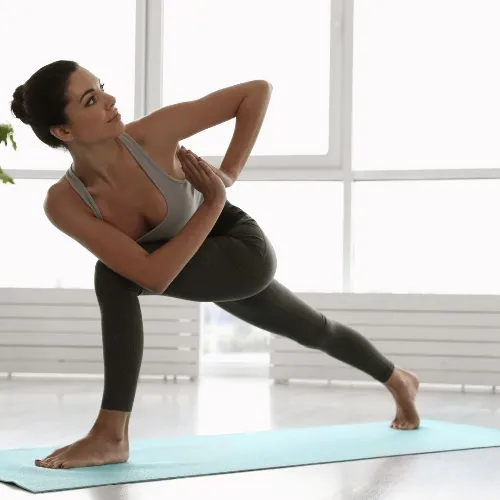
The well-known physical postures (asanas) are only one of eight limbs in this system. The others—Yamas and Niyamas (ethical observances), Pranayama (breath regulation), Pratyahara (withdrawal of the senses), Dharana (concentration), Dhyana (meditation), and Samadhi (absorption)—are all part of the inner work that yoga truly invites us into.
This isn’t a checklist. It’s a path—fluid, nonlinear, and deeply personal. It doesn’t require perfection, but it does require honesty and commitment.
Why It Matters Now More Than Ever
You don’t need to live in a cave or renounce your worldly life to walk this path. That’s the power of the Yoga Sutras: their enduring relevance. If anything, the modern world—with its distractions, compulsions, and overstimulation—needs this wisdom more than ever.
In a culture obsessed with productivity and performance, the Sutras remind us that the real work is internal. Can we sit in stillness? Can we observe our own thoughts without reacting to them? Can we make choices from clarity instead of compulsion?
These teachings don’t ask us to suppress or deny. They ask us to see—to observe the fluctuations of the mind (vrittis) and gradually loosen their grip through sustained practice (abhyasa) and non-attachment (vairagya). When those fluctuations subside, we don’t become something new. We remember who we’ve always been.
The Practice of Living the Sutras
The Yoga Sutras are not poetic quotes to admire. They are invitations to practice, again and again. You fall off the path. You come back. You get distracted. You return. In this way, the sutras aren’t something you read—they are something you live into.
This path isn’t about finding comfort. It’s about finding truth. And from that truth comes something rare: a steady heart, a quiet mind, and a life lived from presence rather than pretense.
For anyone who feels the quiet ache for more—not more achievement, but more meaning—the Yoga Sutras are a mirror, a compass, and a call to remember the freedom that’s already within you.
Interested in exploring the Yoga Sutras more deeply?
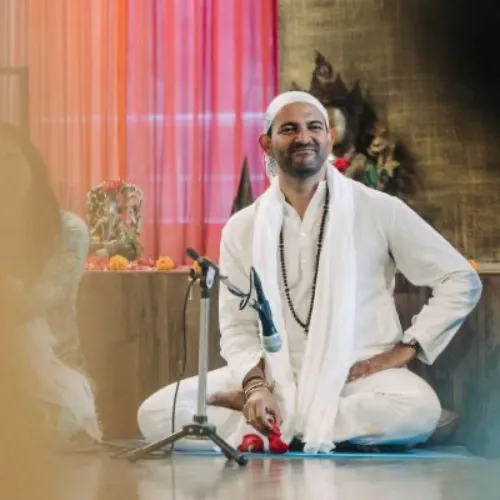
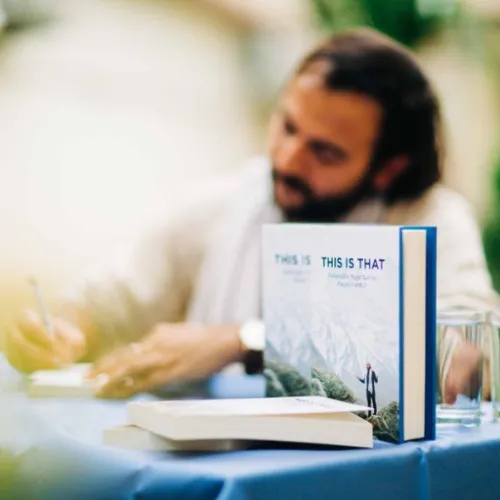
Check out This Is That by Himalayan Master Yogi Anand Mehrotra—a powerful guide to bringing the sutras to life, not just in theory, but in practice.






































Monday 26 Oct 2026 07:00:00 PM IST
Tuesday 27 Oct 2026 07:00:00 PM IST
Wednesday 28 Oct 2026 07:00:00 PM IST
Thursday 29 Oct 2026 07:00:00 PM IST

Monday 26 Oct 2026 06:00:00 AM IST
Friday 30 Oct 2026 06:00:00 AM IST

Your purpose here is to evolve, to transform, to experience your radical aliveness, to awaken to your true nature. You are the path. The path is you. The time is now.